

What is the engine brake like and its uses?
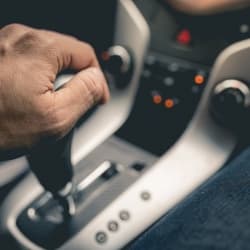
To reduce vehicle speed, sometimes just pressing the brake pedal is not enough. The car needs extra braking so that the speed can decrease. In such conditions, the engine brake will really help slow the vehicle.
What is Engine Brake?
Engine braking is a technique to slow down a car's speed by relying on engine rotation when the transmission is lowered to a lower gear. This trick is useful for easing the work of car brakes which are overwhelmed in slowing down the speed of the car.
Using the engine brake is usually done on extreme and long downhill roads or during emergency conditions. In that situation, the brakes definitely work hard. However, if you are forced to brake continuously, the brake load will be excessive. Brakes can get hot and less responsive. One mistake, the brakes ended up failing.
To prevent this from happening, it is highly recommended to use engine brakes. The driver just releases the gas and lowers the gear to a lower level. This step will make the car slow down because the engine is also braking.
How Effective?
The effectiveness of the engine brake is quite high. It is believed that braking will be helped by up to 50% when doing so. However, make sure to also pay attention to the Revolutions Per Minute (RPM) on the car dashboard.
Keep the RPM at a low level when engine braking is applied. This will ensure safety for the car engine.
How to Do an Engine Brake
Want to try doing it? There are technical differences in engine braking in manual and automatic transmission cars.
â— Engine Brake in Manual Cars
Engine braking in a manual car can be done easily. The driver just needs to lower the gear while taking his foot off the gas pedal.
However, to be safe, gear reduction is done gradually according to the order of the teeth. For example, from 4th gear, engine braking is done by lowering to 3rd gear, then to 2nd gear, and then to 1st gear. Do this slowly until you get to the desired low gear.
If you do it correctly, braking will be helped. The car's speed will slow down as desired.
â— Engine Brake in Automatic Cars
Engine braking can also be done in automatic cars. However, there are differences in techniques for doing this between cars with conventional AT and CVT transmissions.
In a car with a conventional AT transmission, engine braking can be done by downshifting from D to 2. Apart from that, if available, you can also do this by pressing the Over Drive (OD) button.
When shifted to 2nd gear from D, the car's speed will slow down. If it's still not enough, braking can be continued to L gear. Just make sure the engine braking is done gradually from D to 2 and then to L.
Meanwhile, the OD function is the same. OD is useful for moving the transmission to low gear. In this way, the engine brake also works.
When activated, the OD will give a command to hold the transmission in a lower position. The driver must turn it off when he wants to drive normally again.
It's different with engine brakes in CVT cars. To do this, the driver just needs to play the paddle shift.
Operating it will make Gear shifting can be accessed by playing with the transmission lever or via the paddle shift lever located behind the steering wheel. The working principle is similar to gradually reducing the gear to a low level.
Apply the engine brake when you feel it is necessary. Combine this with pressing the brake so that the vehicle's speed immediately slows down. Then the braking will be able to run optimally, without worrying that the brakes will be damaged.